Artist Bio
“South African Native. BA graduate in Fine arts and Drama. Drive-in stalker, fire chaser, magic bus driver, rooftop venue instigator, recovering optimist. I am captivated by the tension between dramatic and astounding beauty in the South African landscape and the results of our presence within it. My work is documentary in intent but I am not a disconnected observer. I like my pictures to tell stories, to reach beyond the “document”, to seek, convey and engage both the reality of social context whilst providing a place for the world of imagination.”
Project Statement
“At odds with the perception of industrial Johannesburg, is the notion of Johannesburg as home.
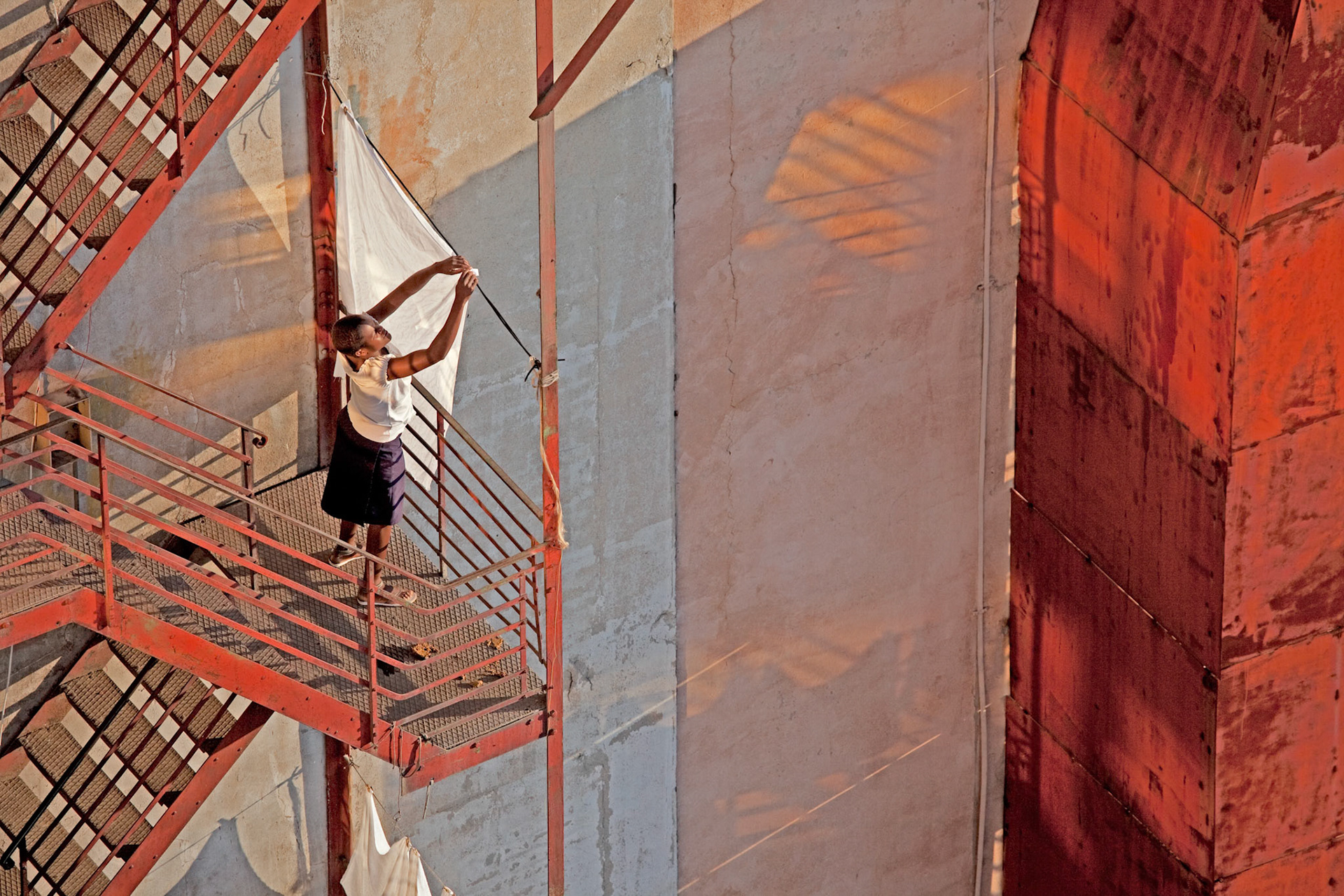
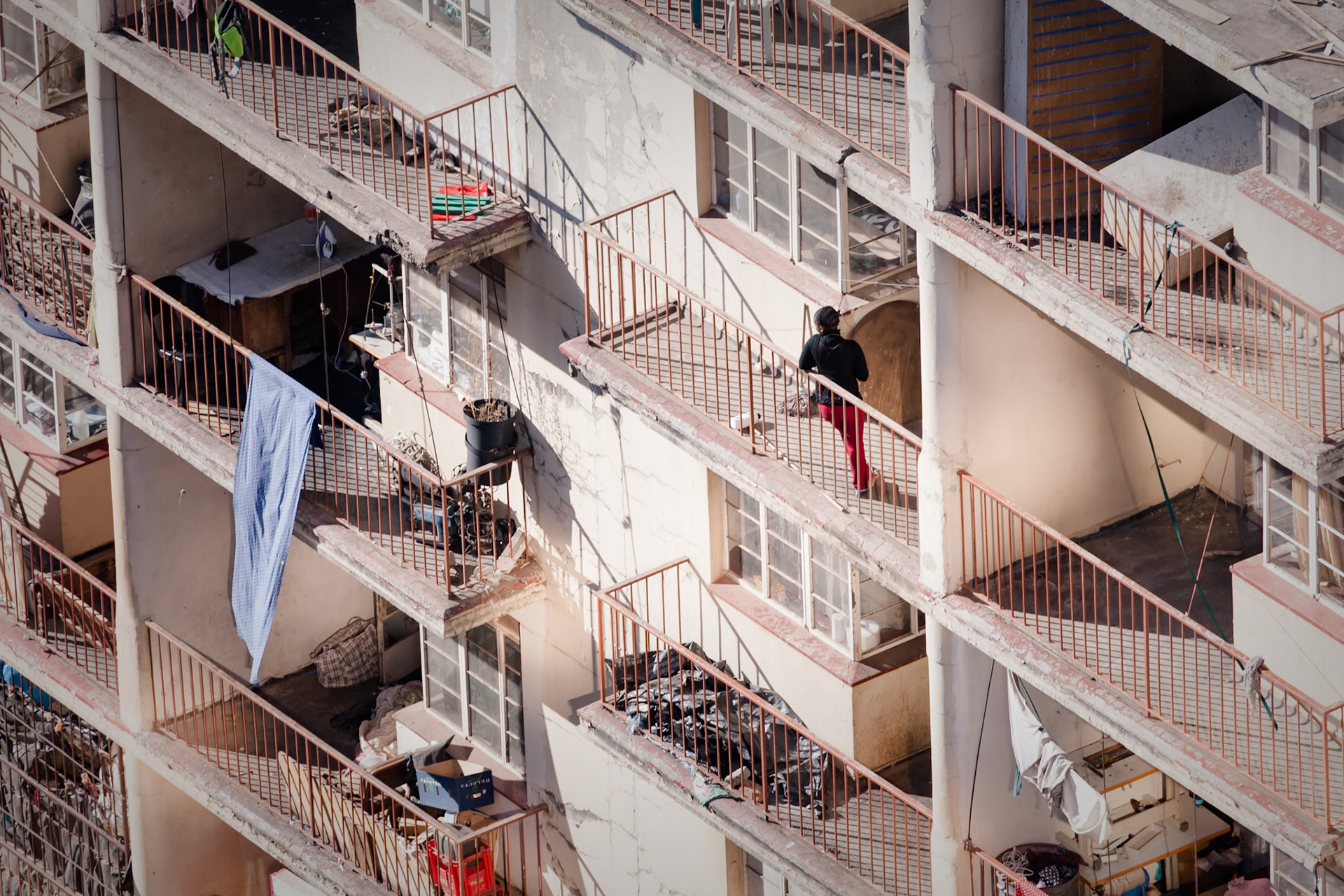
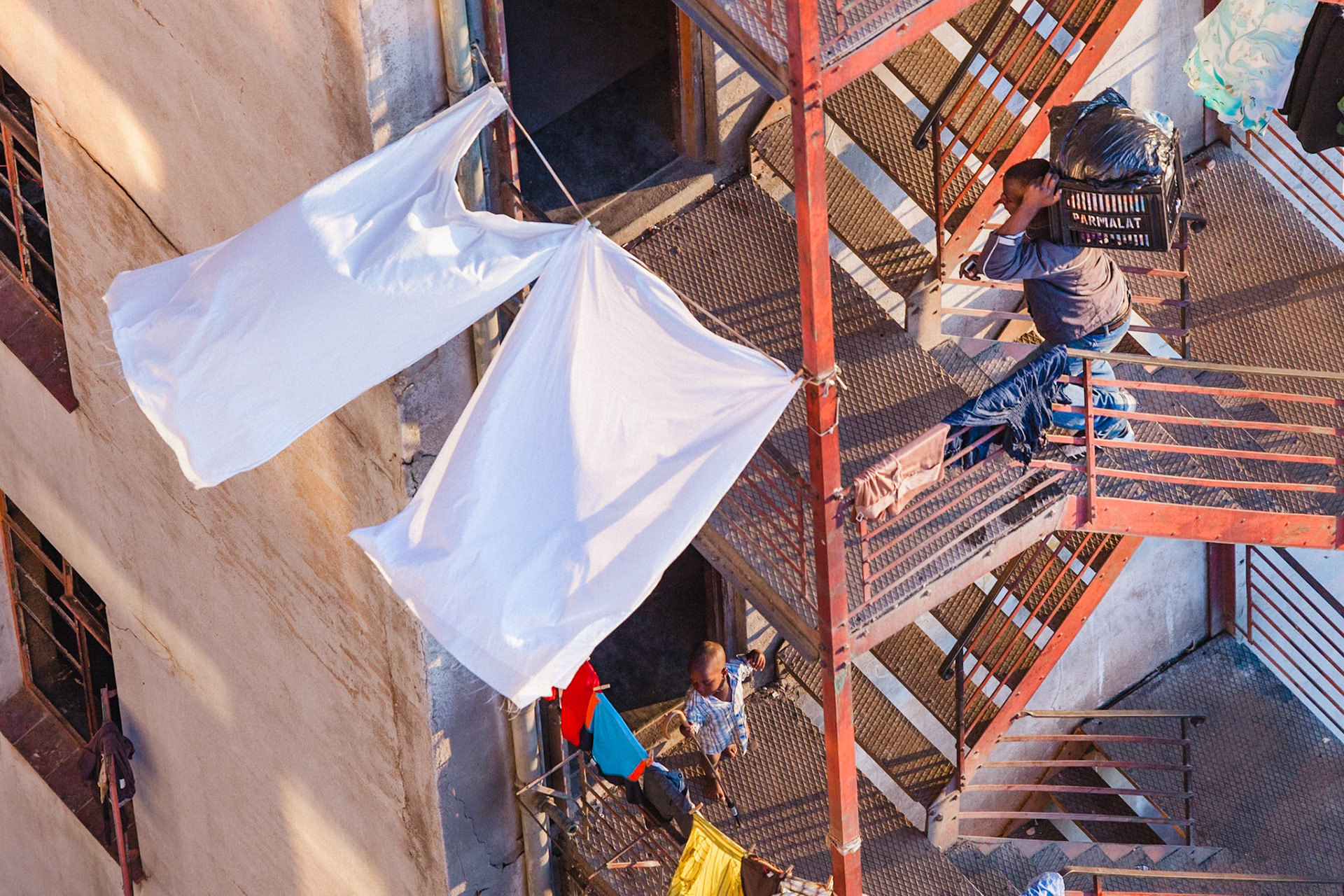
Days for rest, laundry, worship, being human reveal a rhythm and a ritual that becomes community.
I hope these images of Johannesburg convey and engage both the reality of social context whilst providing a place for the world of your imagination.”
Days for rest, laundry, worship, being human reveal a rhythm and a ritual that becomes community.
I hope these images of Johannesburg convey and engage both the reality of social context whilst providing a place for the world of your imagination.”
...
REVIEW CRITERIA
1. What is the single most important question/concern you have about your project that you wish to have answered here in this review?
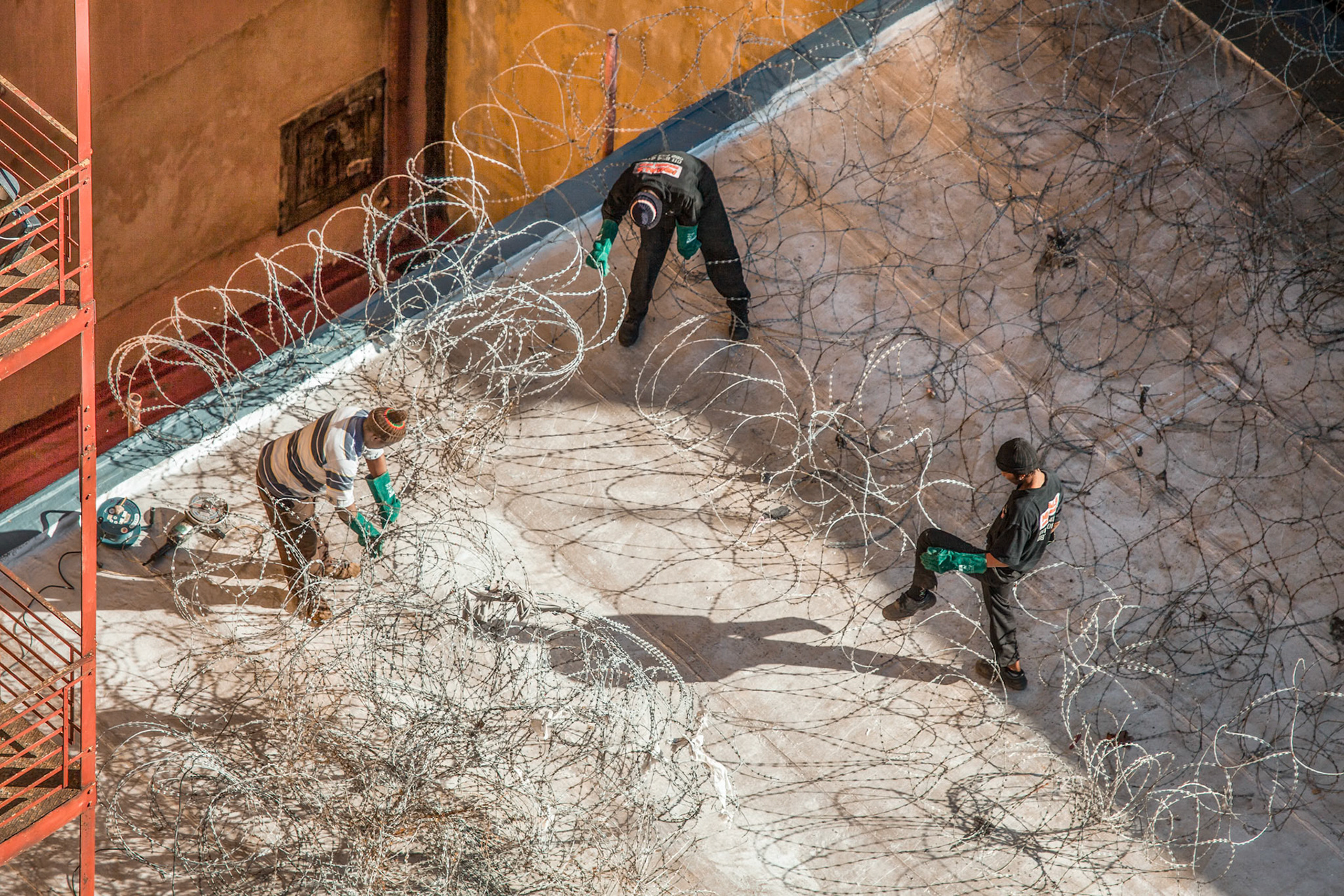
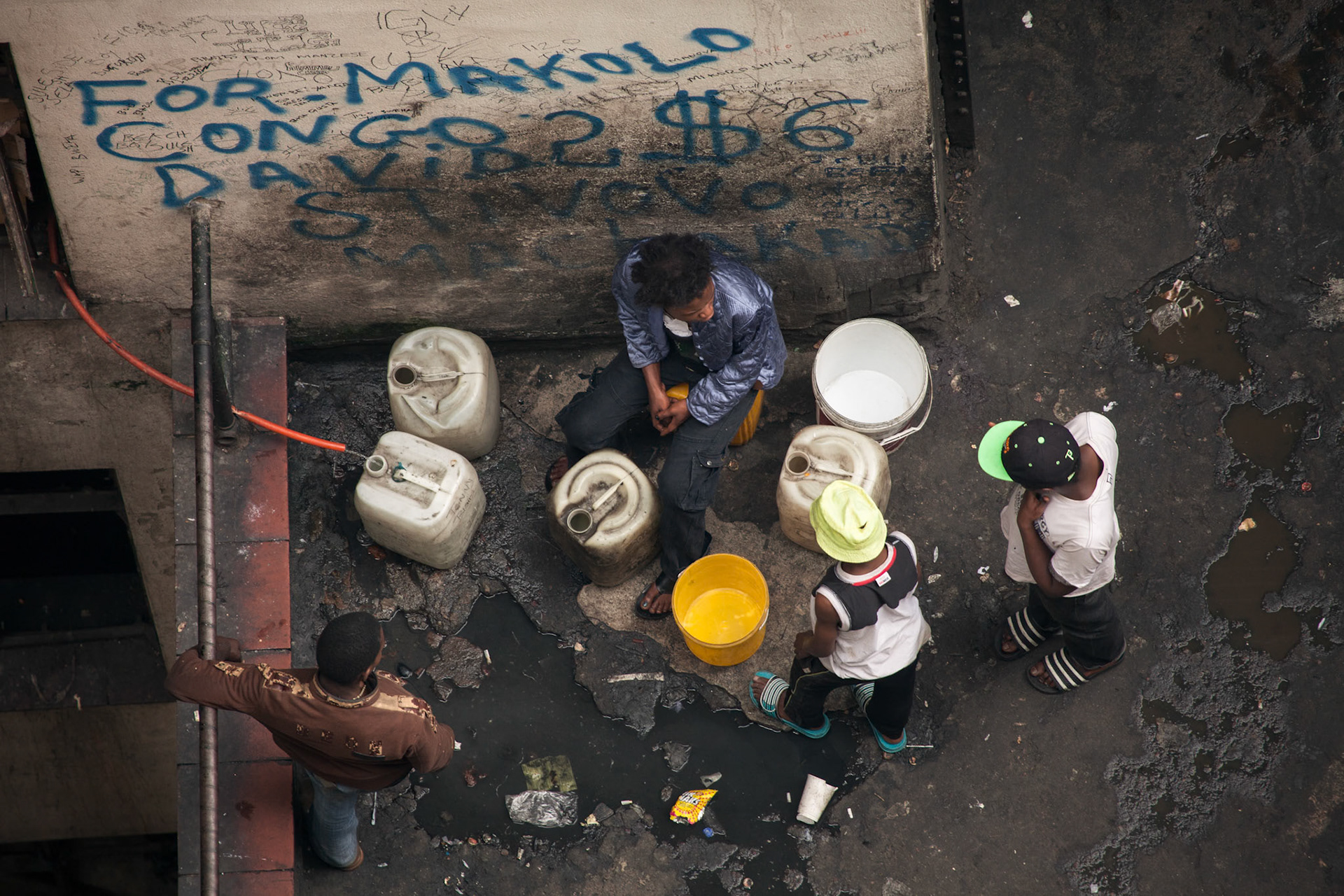
Someone asked me recently if I liked looking down on people. The aerial perspective of these photos implicates me as an “outsider” making voyeuristic photos, of people being people, in ways that could be considered to be culturally different from my own. Taken out of context, and in retrospect, I know that’s problematic, even while it's part of the story I'm telling. Do my photos read as exploitative?
2. What do you hope to accomplish with your photography in the next few years?
My ways of seeing Johannesburg evolved over time. My approach and direction have, with this project, become more succinct. I’m interested in what makes a city work. I’m interested in the human scale of cities. I think I’ve learnt a certain vocabulary of city so I’d like the challenge of juxtaposing and mapping that vocabulary in other cities, in comparison to Johannesburg, or elaborating / testing my perceived reality by making face to face portraits.
3. Is this an ongoing or completed project?
ongoing
4. Do you consider yourself a
professional
5. What genres of photography do you work in (mark all that apply)
fine art, documentary, photojournalism, street, portrait
Reviewer Portfolio Feedback
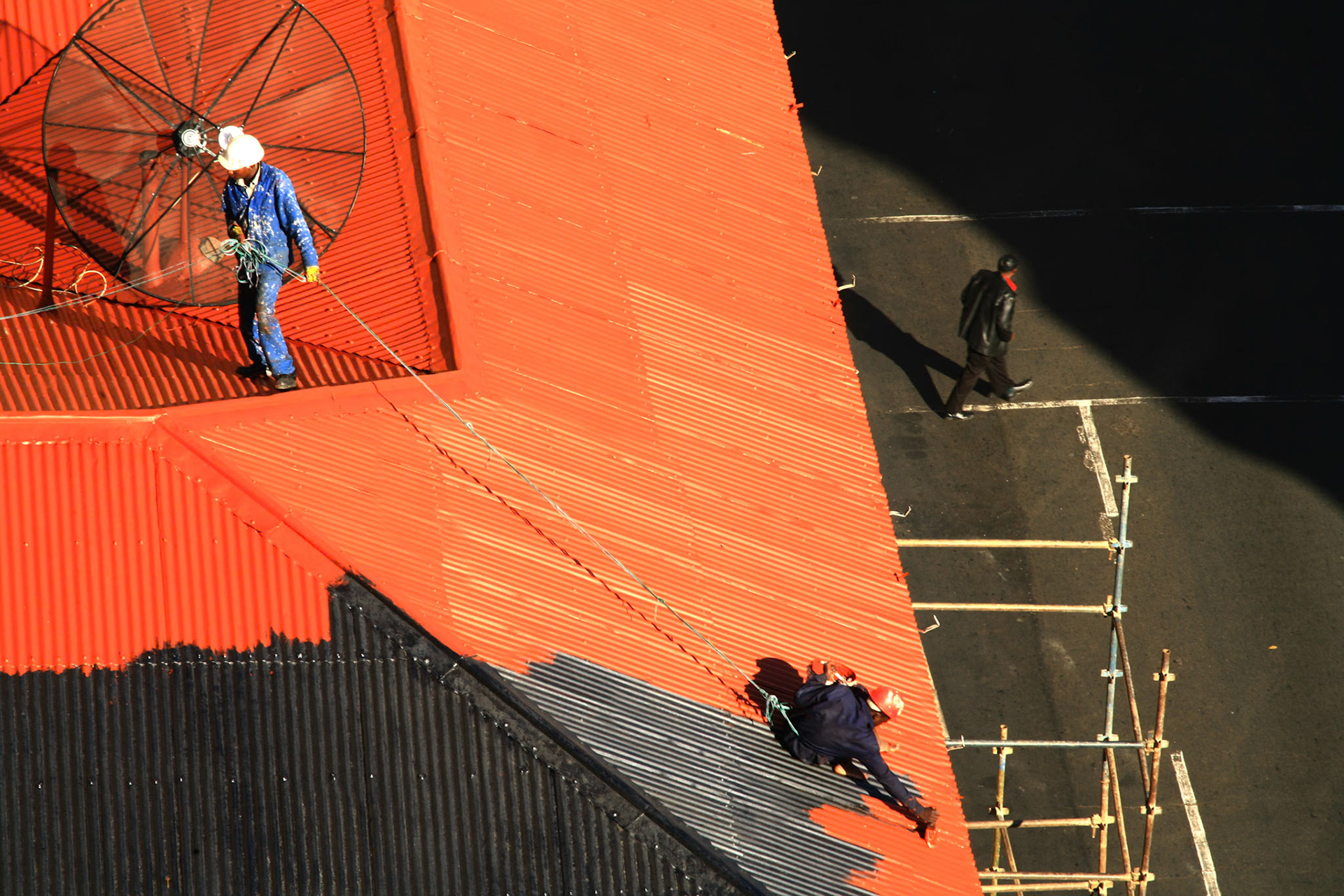
Hello Alastair. I chose your series to review your series, titled, “Stad / City : To Let / For Sale” because I find it visually interesting. I have taken some time to study your photos looking for visual clues about what you are trying to achieve in your photography practice. You provide a brief statement that says, “At odds with the perception of industrial Johannesburg, is the notion of Johannesburg as home. Days for rest, laundry, worship, being human reveal a rhythm and a ritual that becomes community. I hope these images of Johannesburg convey and engage both the reality of social context whilst providing a place for the world of your imagination.” This statement makes me want to learn more! Though I can see in your photos where your inspiration comes from. Based on what I see, I think you composed your images to create imaginative narrative experiences for the viewer. It definitely appears that you are working on making photos in a unique, artistic, and narrative way, where each photo tells a story about the geometric and very human scenes in the photos.
By using your creative compositional technique of isolating scenes and juxtaposing you transform scenes of life into interesting observations, your own perspectives. Your framed compositions create designs that speak about the geometry of urban life, color, light and shadow. The visual interactions between motion and stillness, brick and sky, and light and shadow form visual relationships between architectural forms and a type of powerful mathematical visual order. I can see your sense of design in these photos. I think you accomplish your goals by composing and juxtaposing geometric structures layered on top on one another in a way that compresses space and removes all context and sense of scale. The designs seek to show some visual relationship between these spaces and human beings that inhabit these places.
These worlds remove the viewer from their commonly understood vantage points and you take them into more visually chaotic worlds. By compositionally combining, and isolating the subject matter from the larger environment, the photos you create promote feelings of an attempt at imposing order upon chaos. By removing the context of the subjects the images become very abstract. You put the viewer in a position to speculate what (or where) it is they are seeing. Because of this, the images evoke ideas around vantage point, perception, and imagination.
Your images also speak about the single, human form. In two of the photos there is one, solitary person represented as a witness to the scene. They also serve to create a sense of scale. It brings to the photos feelings of isolation and solitude. I think your ideas and your observations are fascinating. I feel that the images can also be seen as a cohesive group of designs or as powerful individual images.
All of your compositions fit within the familiar 35mm photographic frame. You use the space in the frame really well, to make sure everything in the frame contributes to the composition. The buildings appear to be geometric-graphic elements on the screen, prompting the viewer to ask questions about their volume and dimensions. The photos are interesting because they blur the line between architectural photography, street photography, and compositional, poetic design. These visual abstraction and vibrant, industrial colors are clearly important characters in your stories. I think you are also asking that the viewer be sensitive enough to look deeply at your images, to see the details you have included in the frame.
There are strong visual threads that clearly run through your portfolio and the first one is “color”. Your photography also seeks to capture the magic that color can communicate. I think the way you use mostly warm colors speaks about the sense of heat in these environments. You use color as a transformational, alchemical tool to transmute what you see into what you would like others to see. Other threads are leading lines, angular forms, and multiple patterns. In the group of the photos you change up the most common vantage point from the eye level to the bird’s eye view.
Another major thread is abstraction. These photos mysterious because they are so visually abstract. Because the subjects in these photos composed in a very orderly, designed way, you capture images that go straight to the viewer’s imagination. For example, every single photo is dramatic, rich with possibility and evoke feelings of curiosity. Your juxtaposition of visual elements makes the photos visually poetic. You ask the viewer to reason why certain structures have been composed to form visual relationships with other structures – much in the same way we might see in a dream.
I can imagine these photos printed very large, to inspire feelings of awe by creating a sense of scale for the viewer. Large-scale presentation could prompt the viewer to feel small when confronted by the ideas of standing in front of these aerial street scene compositions. Viewers would feel confronted with the feeling of unexpected perspectives.
A second observation/suggestion also has to do with presentation. I suggest that the photos would be powerful in a book. I think your ideas, combined with the photos will make a cohesive presentation. Also with a book, the viewer can hold the images, making the interaction more personal. You could also use the title of the series for the title of the book!
Your images are very dynamic. Your vision of composing these common scenes from this high angle has elevated their importance! These images prove that being observant and investigating is very exciting and who knows where it will lead. Also, don’t feel like you need to be married to the photography world. My advice is that you enter juried art exhibitions and/or show your work within art communities. I think that your images would do well in an “art” environment. Your photos really do cross a lot of creative boundaries, which is highly encouraged in the art world. I suggest you keep an eye on www.callforentry.org for themed calls for artists.
You say, “Someone asked me recently if I liked looking down on people. The aerial perspective of these photos implicates me as an “outsider” making voyeuristic photos, of people being people, in ways that could be considered to be culturally different from my own. Taken out of context, and in retrospect, I know that’s problematic, even while it's part of the story I'm telling. Do my photos read as exploitative?” All photography is exploitative to some degree, but from that perspective, these photos are no different than photographing people on the street. The photographer and the viewer become observers, looking into the scenes from the outside, unless the photographic subjects are looking into the lens. You are just using a unique vantage point to explore the world! Your explorations share a world that most of us would never get to see. You tell stories that we would otherwise never get to experience. This is what successful photographers do!
I have enjoyed looking at your photos and it is clear that photography is one of your passions! Your images and your project are very thought provoking and creative. They are full of stories waiting to be discovered! I would strongly encourage you to keep pursuing your interest in making these amazing above-the-street photos. But, look at lots of portfolios that will give you inspiration to continue your project. Look at the work of Garry Winogrand, Brassai, and even the master, Henri-Cartier-Bresson. I very much enjoyed looking at your photos and I appreciate the way your images are masterfully considered and carefully designed. I hope I sufficiently addressed your concern and I also hope this review is helpful. I look forward to seeing what you will do next!