Who is Alastair Mclachlan?

Artist, photographer, drive-in stalker, fire chaser, magic bus driver, rooftop venue instigator, dreamer and recovering optimist.
I made the 19th floor, ex-laboratory of the Lister Medical building, my home in early 2003.
As an artist, photographer, curator, event organiser and believer in the importance of collaboration and cultural meeting places, I initiated, renovated, directed and ran a rooftop venue from this home, in the Johannesburg CBD, for 12 years.
Photographing Johannesburg from this vantage point began with a naive awe for an experience, so unlike my own experience of growing up on farms. I was initially drawn to the spectacular; the sunsets and the thundershowers, the hustle and bustle, the beauty and the potential. These photographs became my PR toolkit for the venue and my invitation, to others, to come witness it for themselves. I found myself in the business of making Johannesburg look good.
My way of seeing and understanding Johannesburg has, and continues to, evolve and become more nuanced. In time I began to notice details and anomalies, dichotomies and juxtapositions and certain themes developed that brought me closer, to identifying myself as a social documentary photographer.
My work is documentary, in essence, but I am not a disconnected observer and my interest is more allegorical.
I hope my portraits of Johannesburg convey and engage both the reality of her social context whilst proving a place for the world of your imagination. I hope the stories come through, of how she IS - without make-up, undressed on a rooftop.

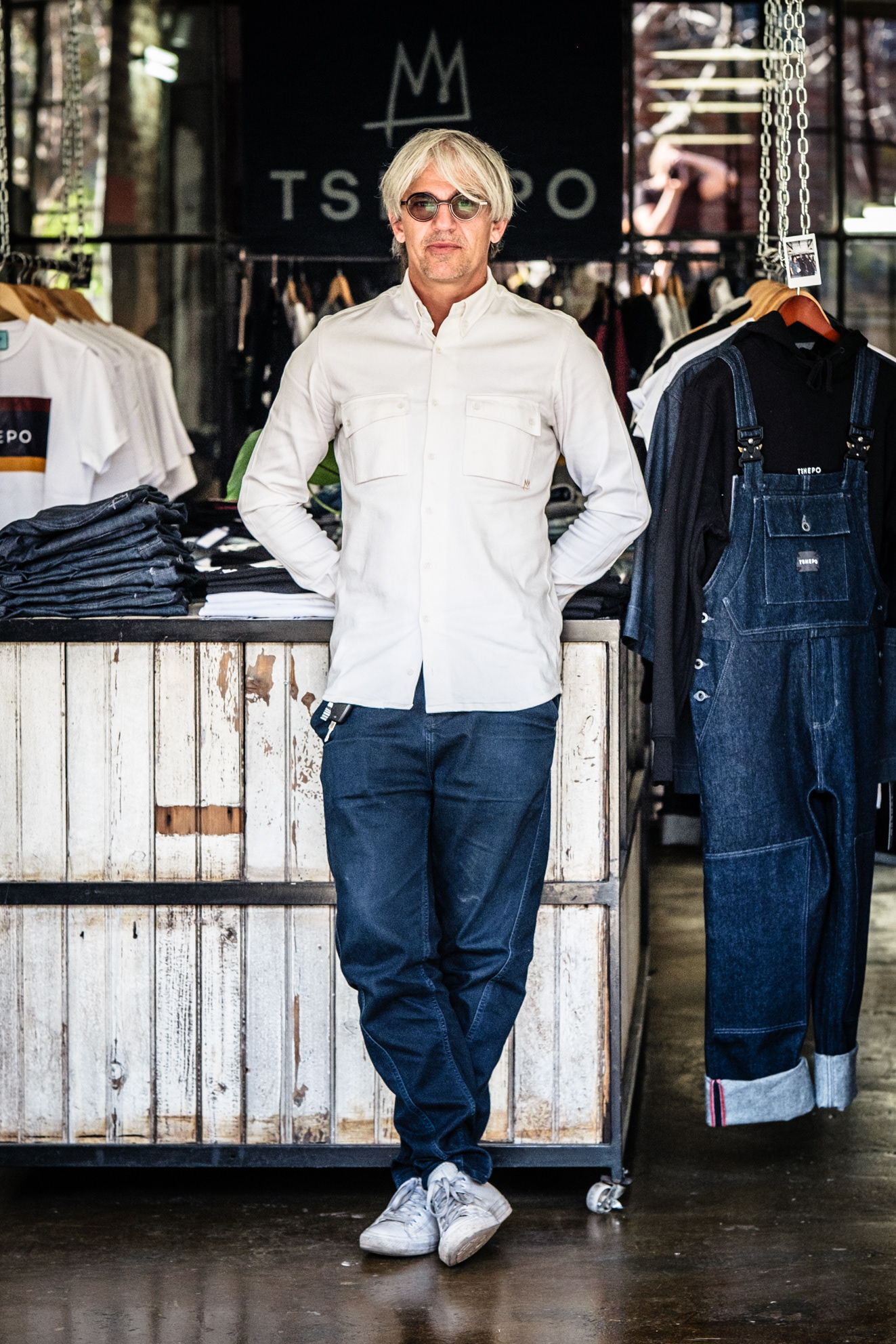
Alastair Mclachlan at Tshepo Jeans at Victoria Yards. Shirt and jeans by Tshepo_Photo by Mari Schultz.

Your recent exhibition "I wrote a letter to my love" allowed visitors to write a postcard to Joburg. What made you want to create this dialogue?
I used to collect stamps as a kid. That lead to collecting postcards. My very first exhibition, of photos of Johannesburg, was called “Wish you were here” and I used to be the proud caretaker of PO Box 1984 Johannesburg 2000, at the Jeppe St. post office.
The act of sitting still, in contemplation and intent and committing ones most inner thoughts by pen to paper, has always been especially poignant to me. There’s this beautiful melancholy of words born in solitary that have such grand aspirations for rapport. The connection between writer and reader is as delicate as a breathe and yet so potentially robust. I believe that words are powerful and that words of pure intent will find their mark, over distance and even time.
I began pairing some of my photos with excepts from famous love letters on instagram, @intermission, recently. I enjoyed how the words danced with the photos.
My Joburg project is my dialogue with Joburg. It's a kind love letter, for a love that is true, but complicated. I was curious how others felt.
I didn’t set out to create a dialogue but I’m thrilled that dialogue took place and that so many people took time out, to join in.
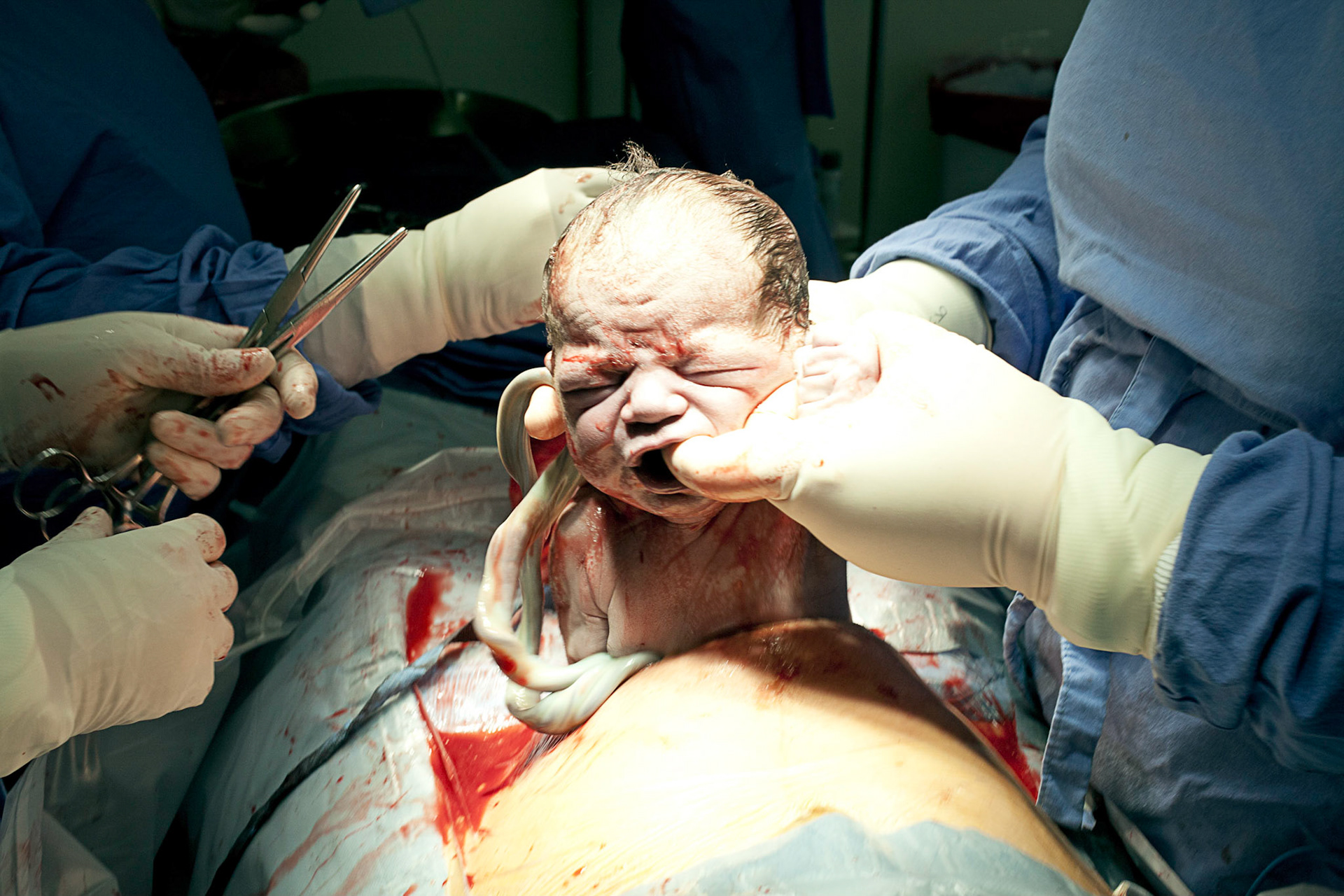
“Hooked”

24 May 2012. Park Lane Hospital

.......

“2.890”

24 May 2012. Park Lane Hospital

What was the most surprising response to the city in these postcards?
"Loving Joburg is like loving that dear sweet creative vibrant person you know, who enriches your life immeasurably, but who you cannot trust to take the most basic care of themselves"
Your 20-year or so project to document Joburg. How did it start?
By accident.
I used to day trip to the Johannesburg Art Gallery with my gran when I was young :
I knew Johannesburg, from the inside, with vestige evidence of colonial glory
….and from the outside, a smoky picture of industry, seen from the highway, driving past.
I only moved to Johannesburg in 1999. I had a solo exhibition at the Generator Arts Space called Fireworks! – cathartic, mixed media works dealing with a sense of loss and cultural memory cycles.
I was subsequently invited to participate in the “Tour guides of the inner city” art intervention program, under the auspices of the “Urban Futures 2000” conferences.
I produced Drive-in murals on neglected spaces and building within the city, strapped a projector to the top of a pink bus and conducted a series of cinematic bus tours.
The tour started at the Market theatre with a film, projected on a painting, of a drive-in, hung between two palm trees.
Showing home grown video art on the drive-in murals along the route, the tour culminated with a 35mm projection of “Felix in Exile” by William Kentridge, during intermission, at the Top Star Drive-in.
I dismissed Joburg but figured, if I was going to live in Joburg, I'd live in Joburg.
I was still painting and documenting drive-ins at the time. I could see the back of the Top Star drive-in from where I lived.
What began as a personal discovery of Johannesburg, spilled over into my excitement of sharing my experience and I established my living space as a venue called Intermission. I hosted my first event for Red Bull, in 2005, and hosted my last in 2014. When the events diary filled up, I packed away my painting studio and started deliberately taking photos.
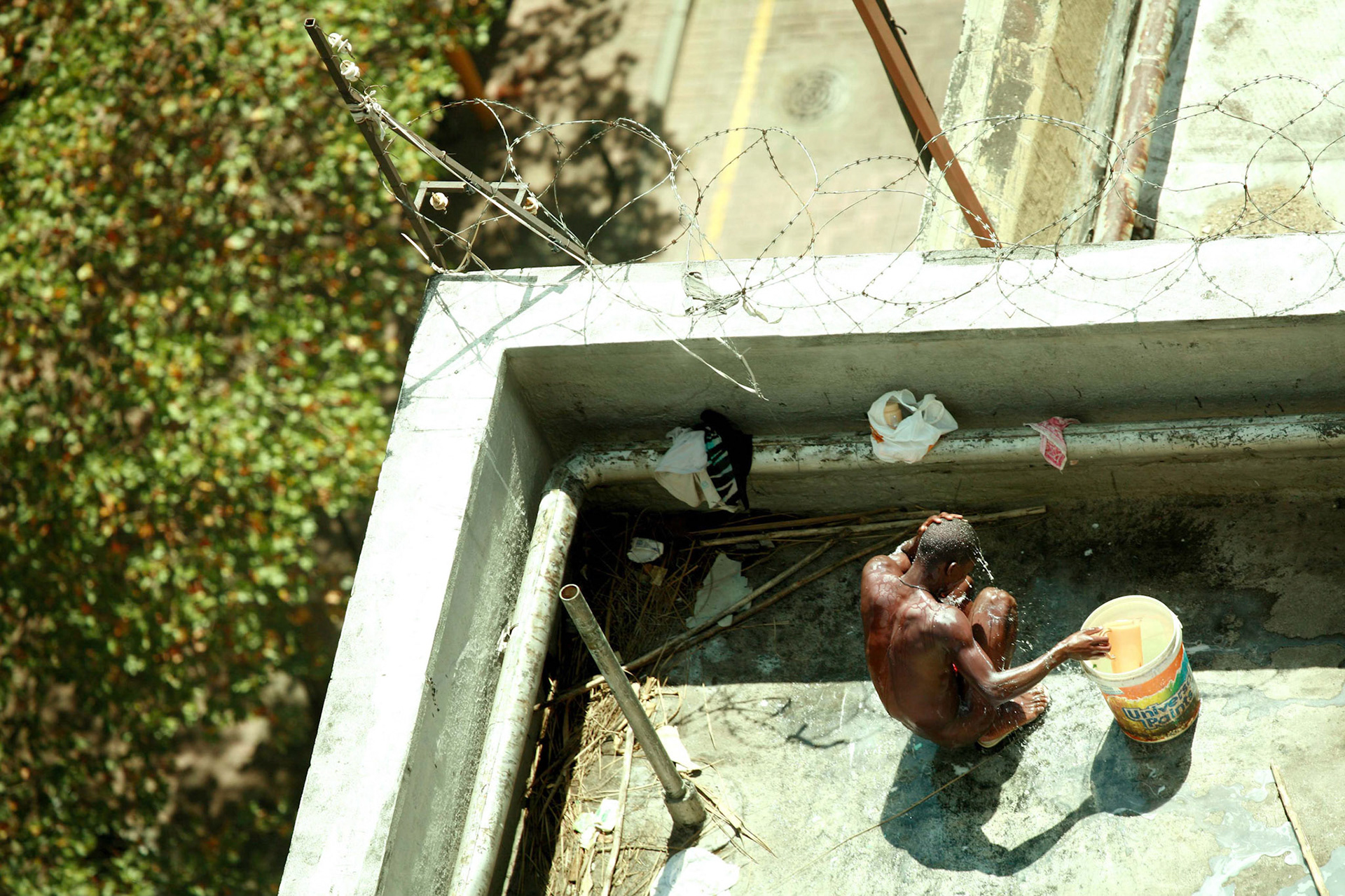
There was a photo I took in 2006 of a person bathing, from a bucket, on the adjacent rooftop of a highjacked building. It seemed immediately significant.

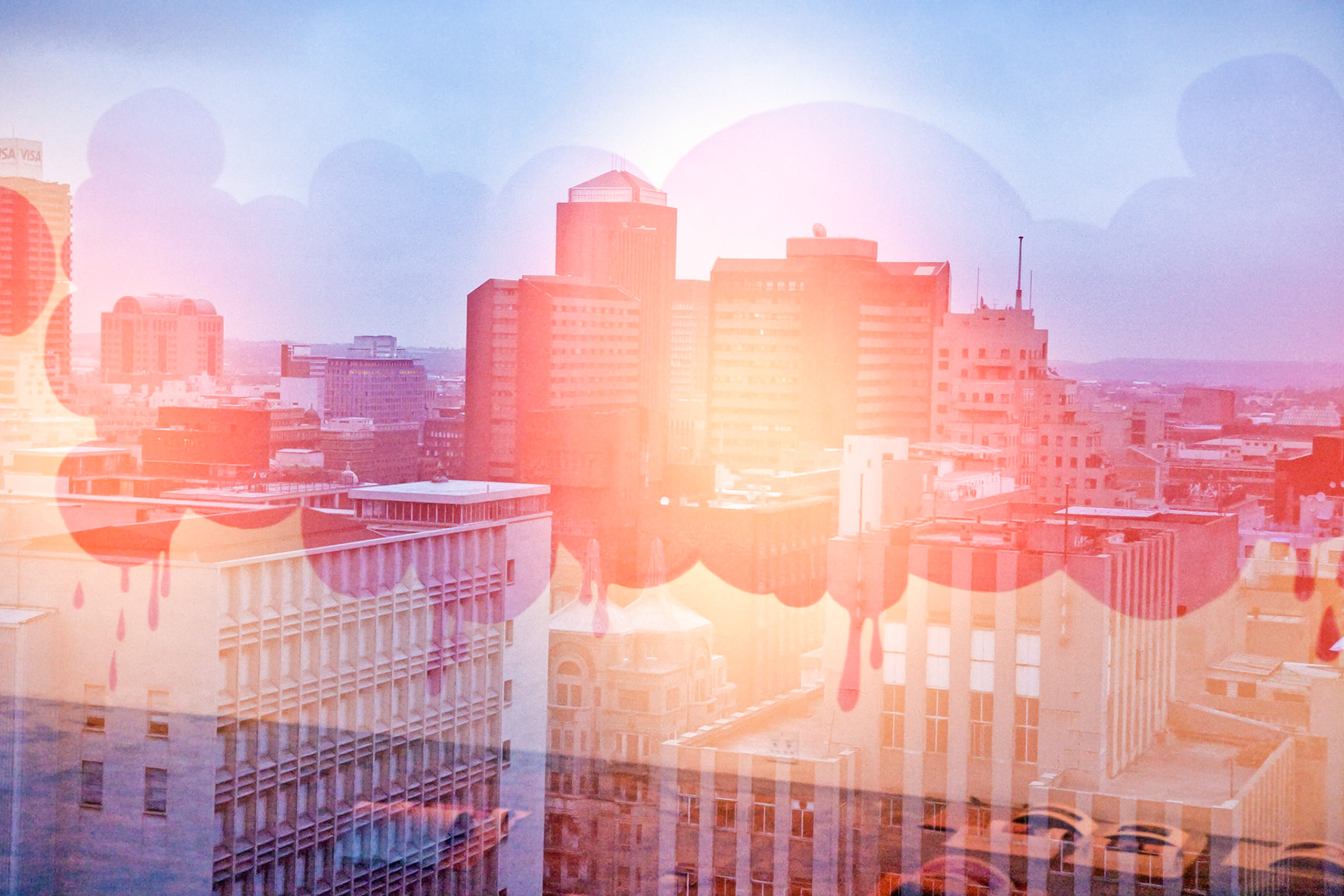
“In the Cloud”

29 November 2007. Johannesburg
Mural by Miss Yucki reflected on an outer window of the Intermission Gallery

You are busy compiling a book of images about Joburg. Tell us about the narrative thread?
My Photos of Joburg, many taken years apart, have started talking to each other.
Layering and informing each other and generating deeper nuanced meanings.
I've decided the book will take the form of several short stories and photo essays including : a Province & its people; Histories & Futures; Economy & economic-life; Space & Time; Marks & Longings; Sustainability & the environment; Next-of-kin; Architecture & details; On-the-line; Thunder & Lightning; Rainbow & Nation; Ablution & Ritual; The Red Staircase; Motherhood; Rooftop Youthhood; Place & movement.
I'm currently working on the Still Life chapter.
I'm calling the opening chapter "Wish you were here". It speaks to how I came to live in Johannesburg and be one of it's cheerleaders. It's my hope that it will set the scene and the tone, which is unashamedly subjective and in some cases quite contentious. I'm not shying away from the fact that I'm part of the story.

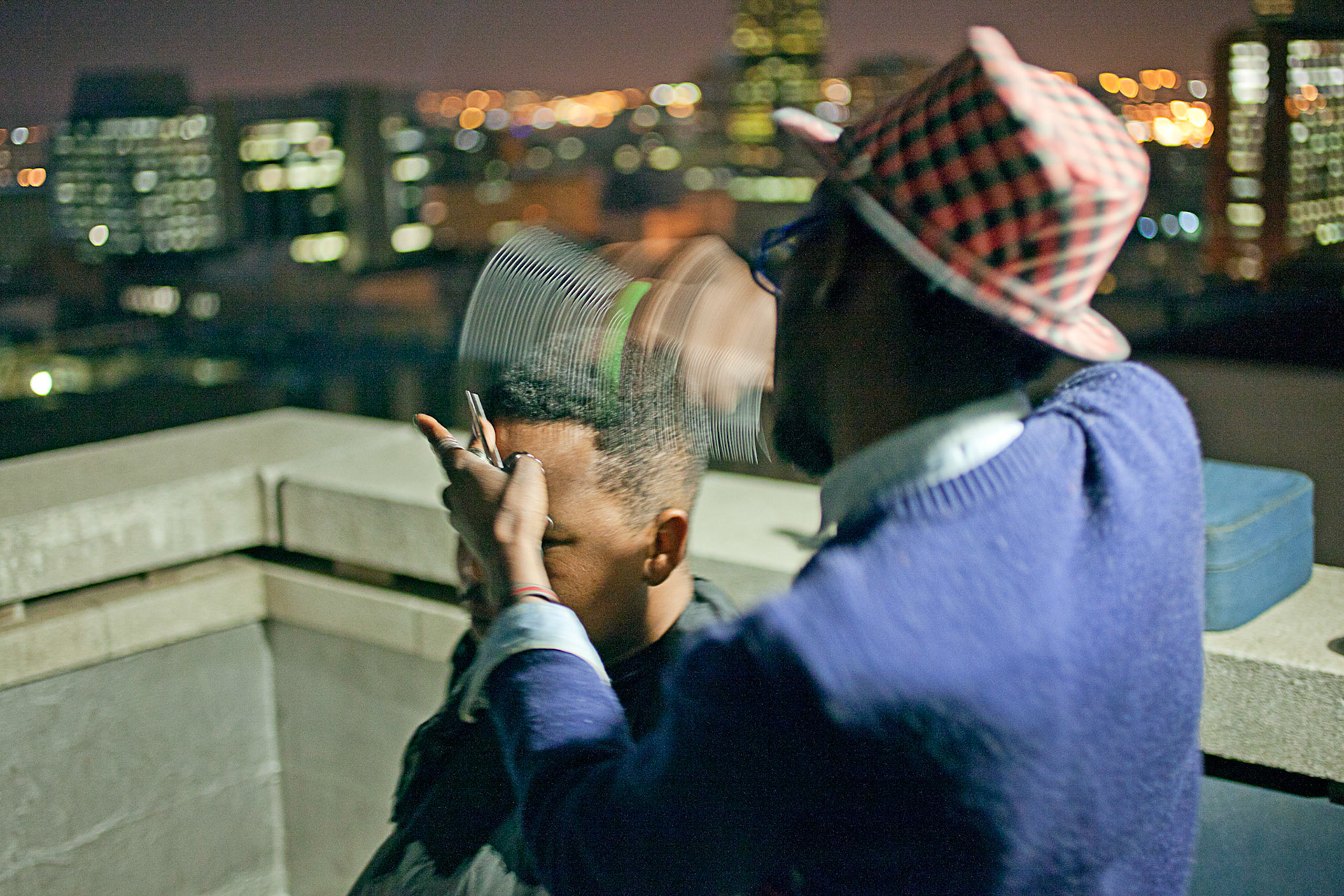
“comb over time”

31 August 2012. Johannesburg
Spiff Mczaul “Street-styling” DJ Medicine at the Butcherboy event
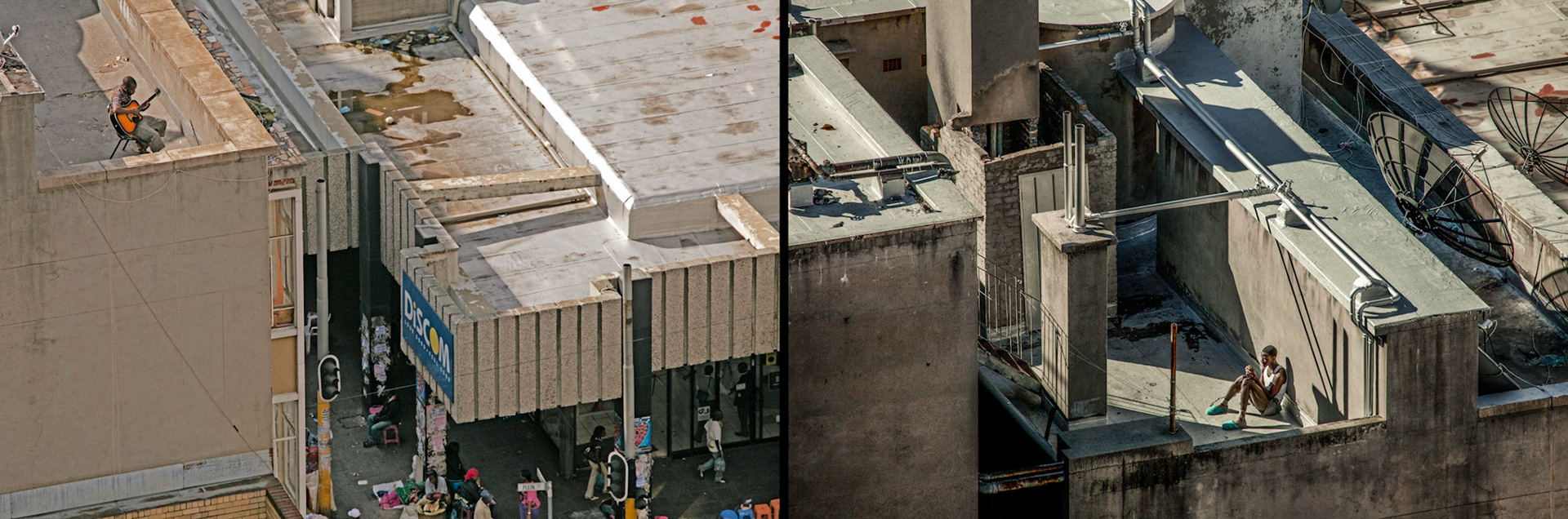
Moving on to your work in Johannesburg, many of your images are shot from an aerial perspective, focussing on the rooftops and small, humane interactions in the context of a vast, industrial city. Can you tell us a bit about this viewpoint? What stories are you interested in telling and what does your working practice look like?Your work has often focused on the views from a rooftop in Joburg. Tell us what stands out when you look at the city from this perspective?
The Joburg CBD is not quite a metropolis. You can hold its perimeter in view from a 19th floor perspective. You can see some old mine dumps and some of the more affluent suburban hubs, on the horizons, so there's a clear geographical and historical context. The CBD is also not one thing. It's a collection of quite distinct precincts, with different personalities. I like that it's possible, with some imagination, to discern a timeline of Johannesburg and its evolution and even look back through time.
Bree street is a one way street. The city grid north of Bree St. (west of about Eloff St.) doesn't align with the streets to the south. Vehicles crossing Bree St., going south, turn 20m into oncoming traffic. The congestion at these intersections are a wealth of amusement and metaphor, when you're not stuck in them yourself.
That sight line from dump to traffic jam, from gritty pioneers with golden aspirations to a picture of all our current impediments and entanglements is, for me, the story of how we are all connected and how Joburg works, even when it doesn't.

“Redemption Song”

4 October 2014. Johannesburg
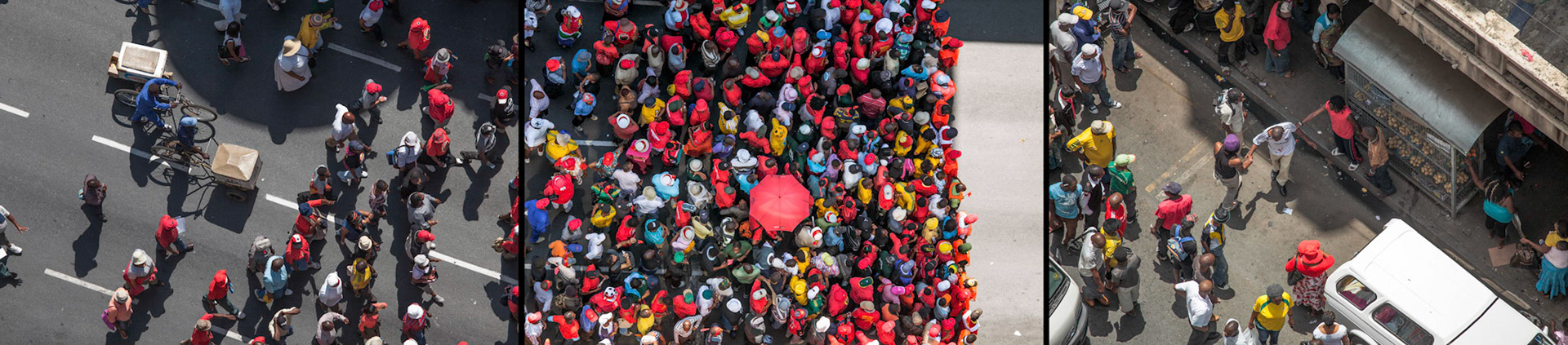
Home is…
a hug from my son

“Thirst”

4 October 2014. Johannesburg
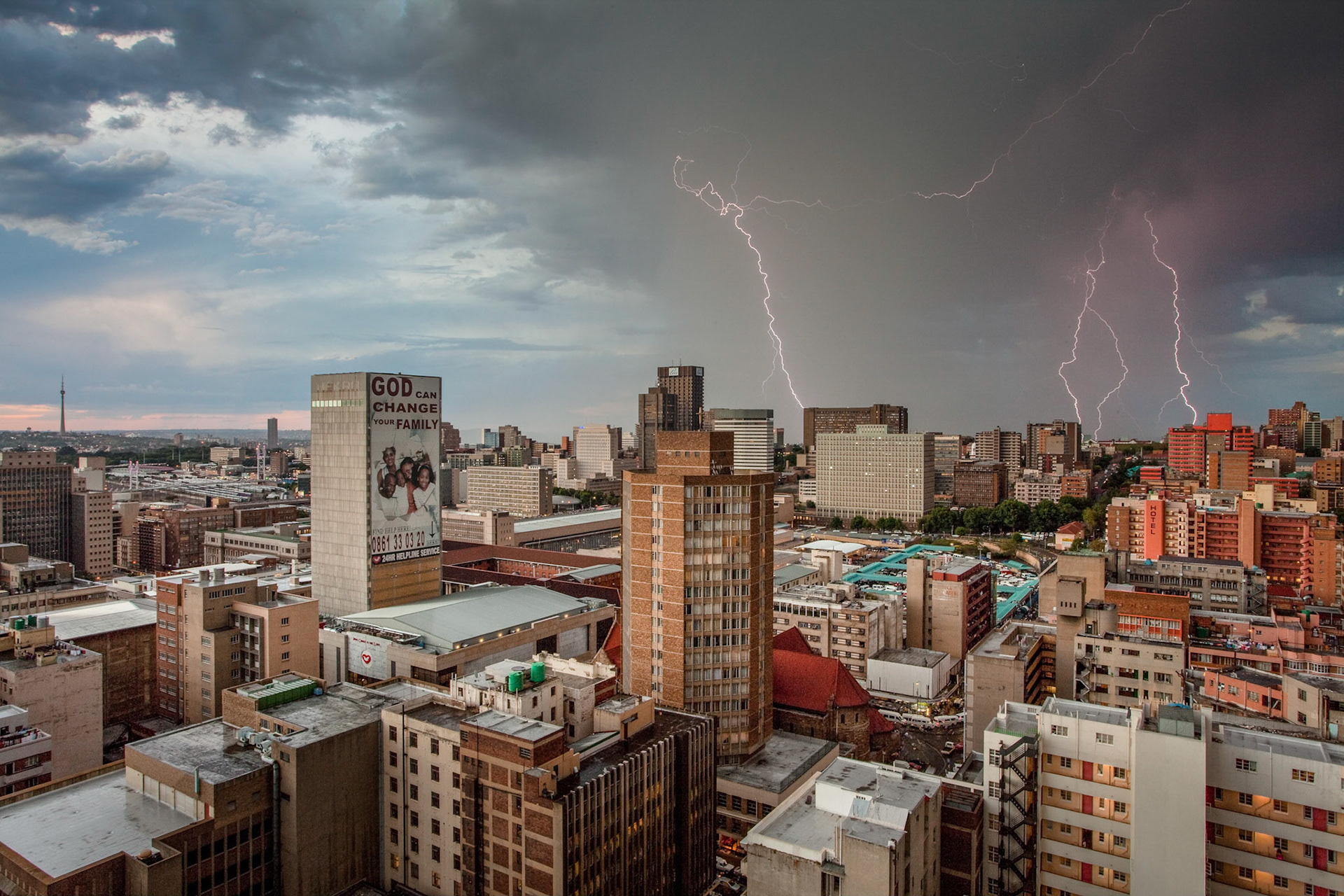
“Opening Night”

10 December 2010. Johannesburg
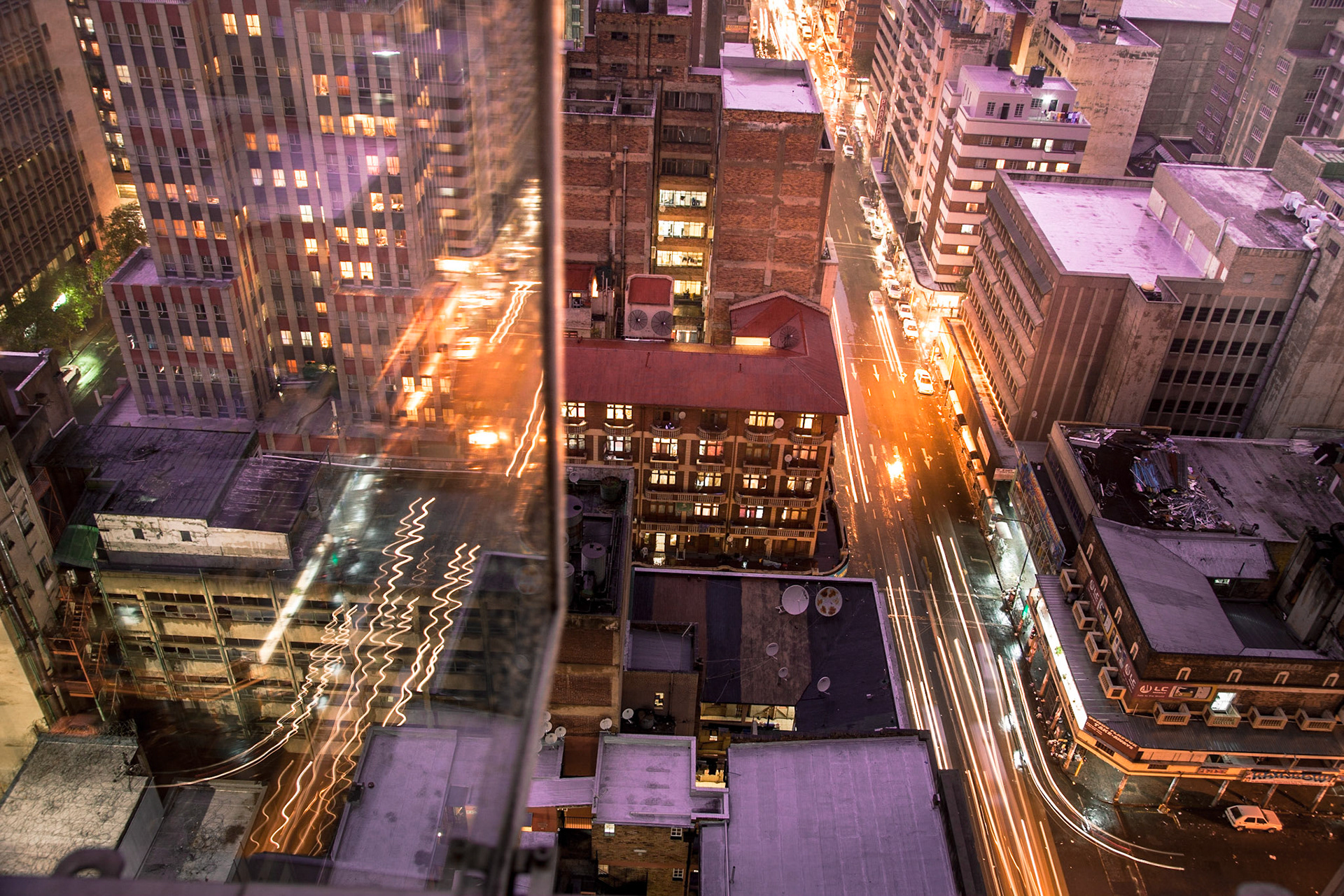
“Mnemonic Glass”

27 October 2012. Johannesburg
Your favourite Joburg suburb, and why you choose it?
I've known Melville the longest. As a favorite, it waxes and wanes and sometimes you want to give it a bath... but it keeps me honest.

“Bath House”

12 January 2007. Johannesburg
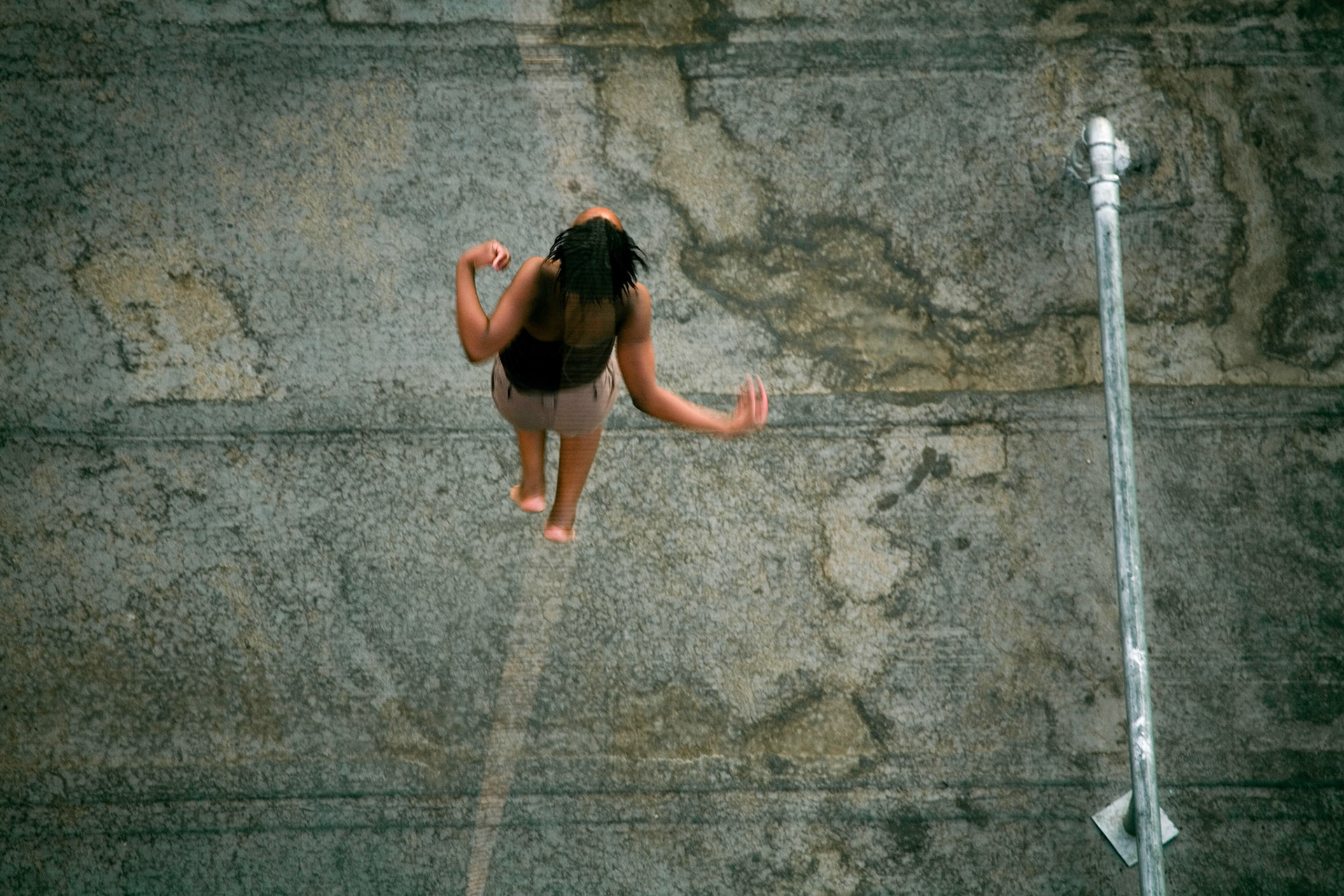
“Skip”

21 September 2007. Johannesburg
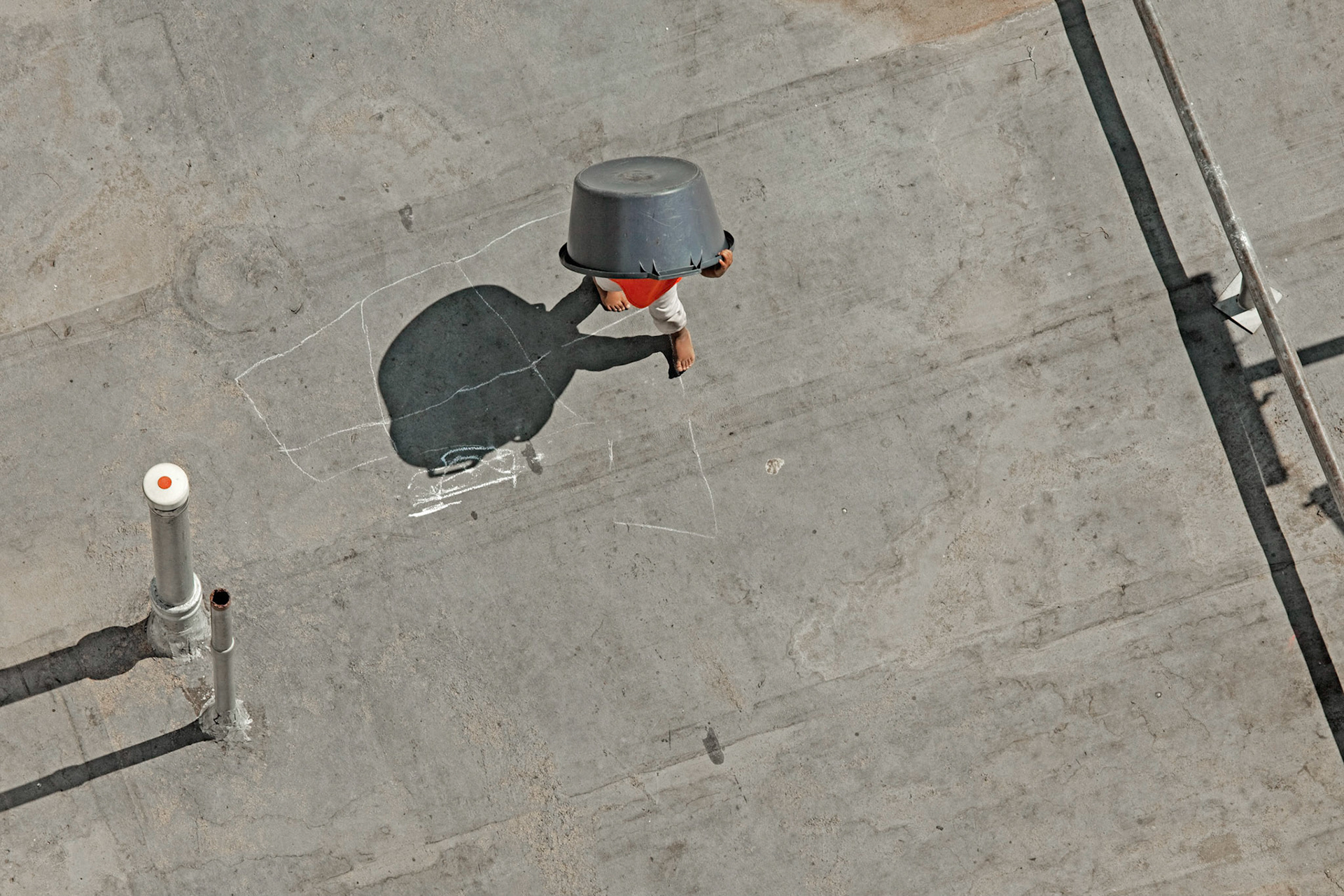
“Ninja Turtle”

18 April 2010. Johannesburg
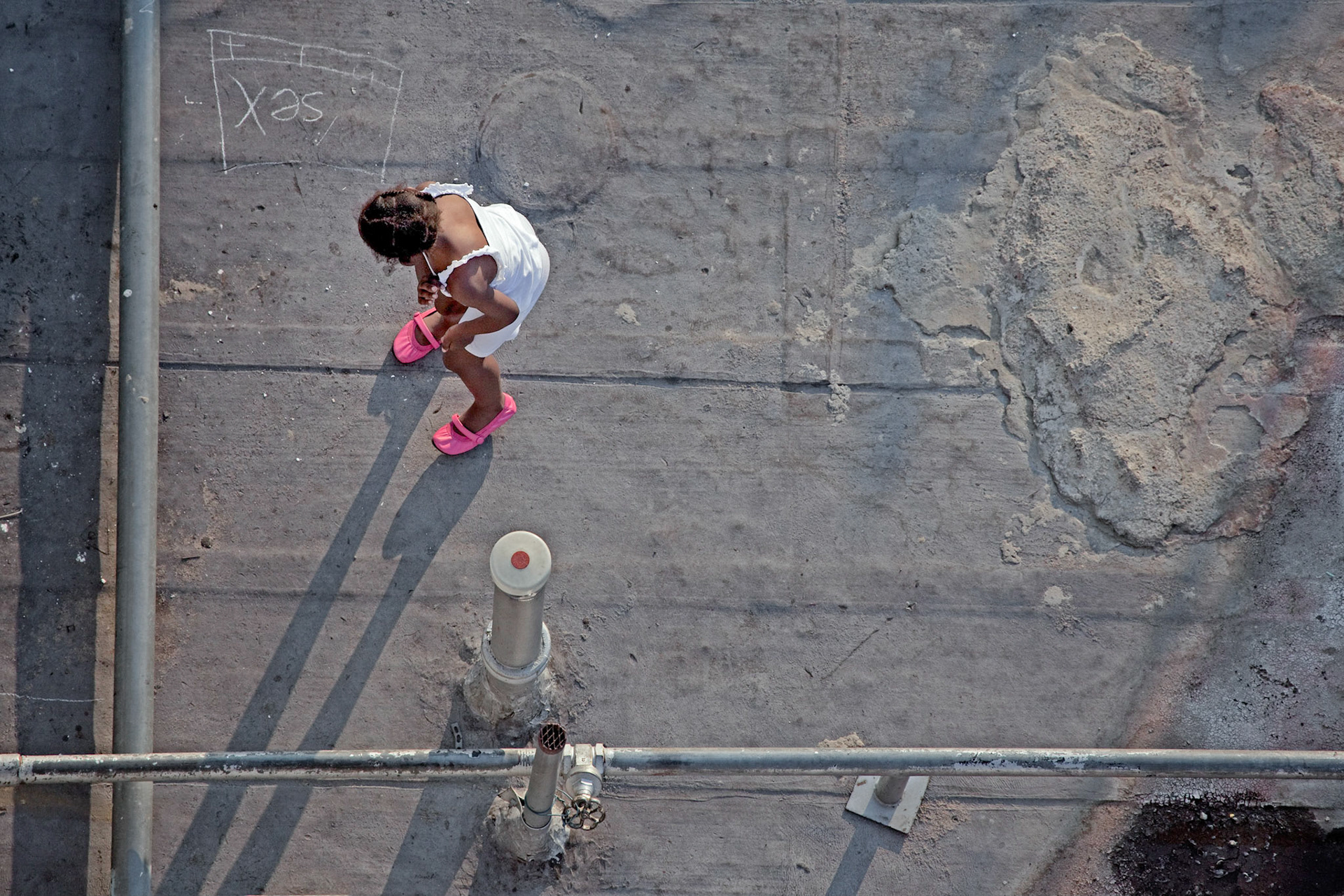
“xes”

16 April 2010. Johannesburg
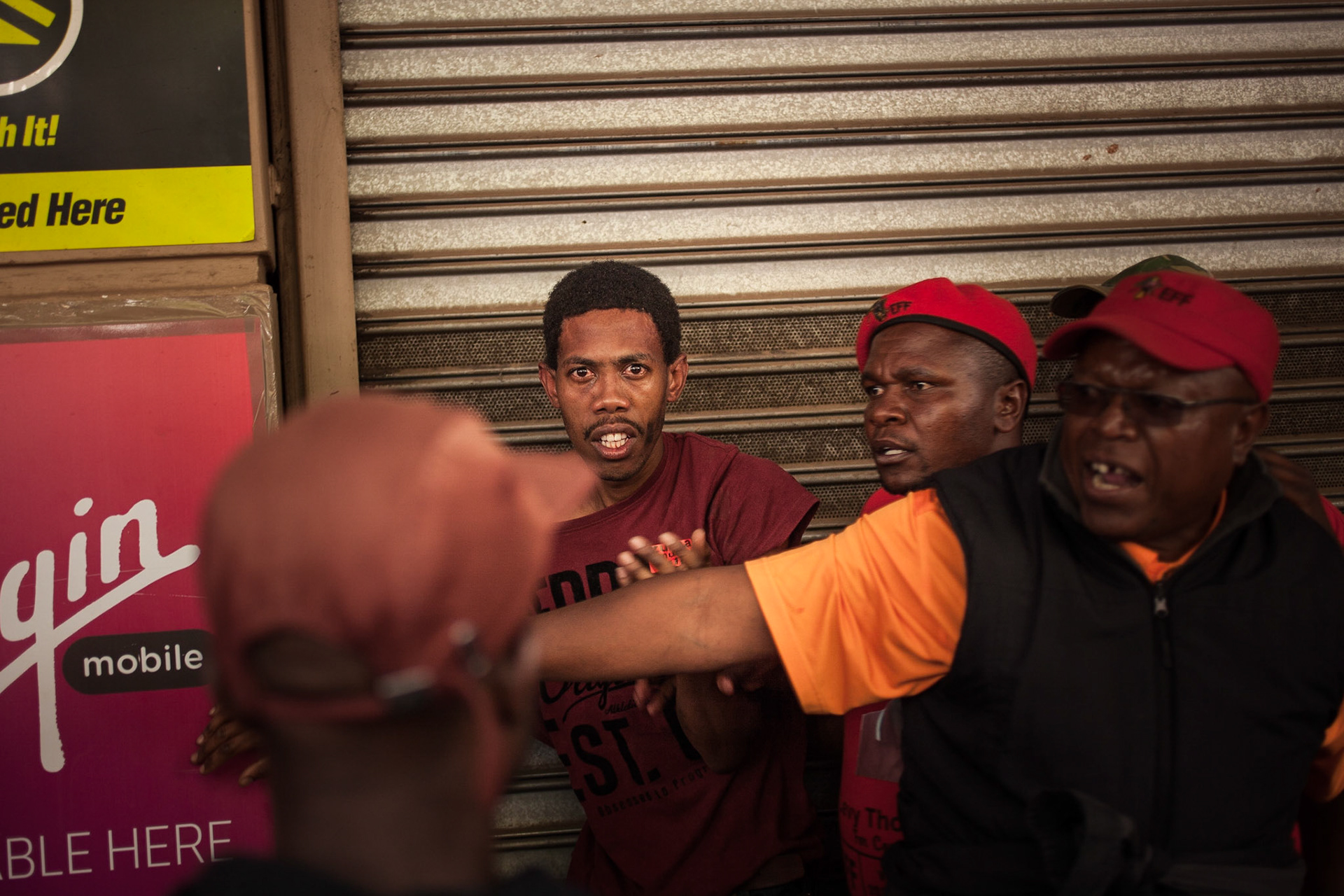
“Direct”

12 April 2017. Johannesburg
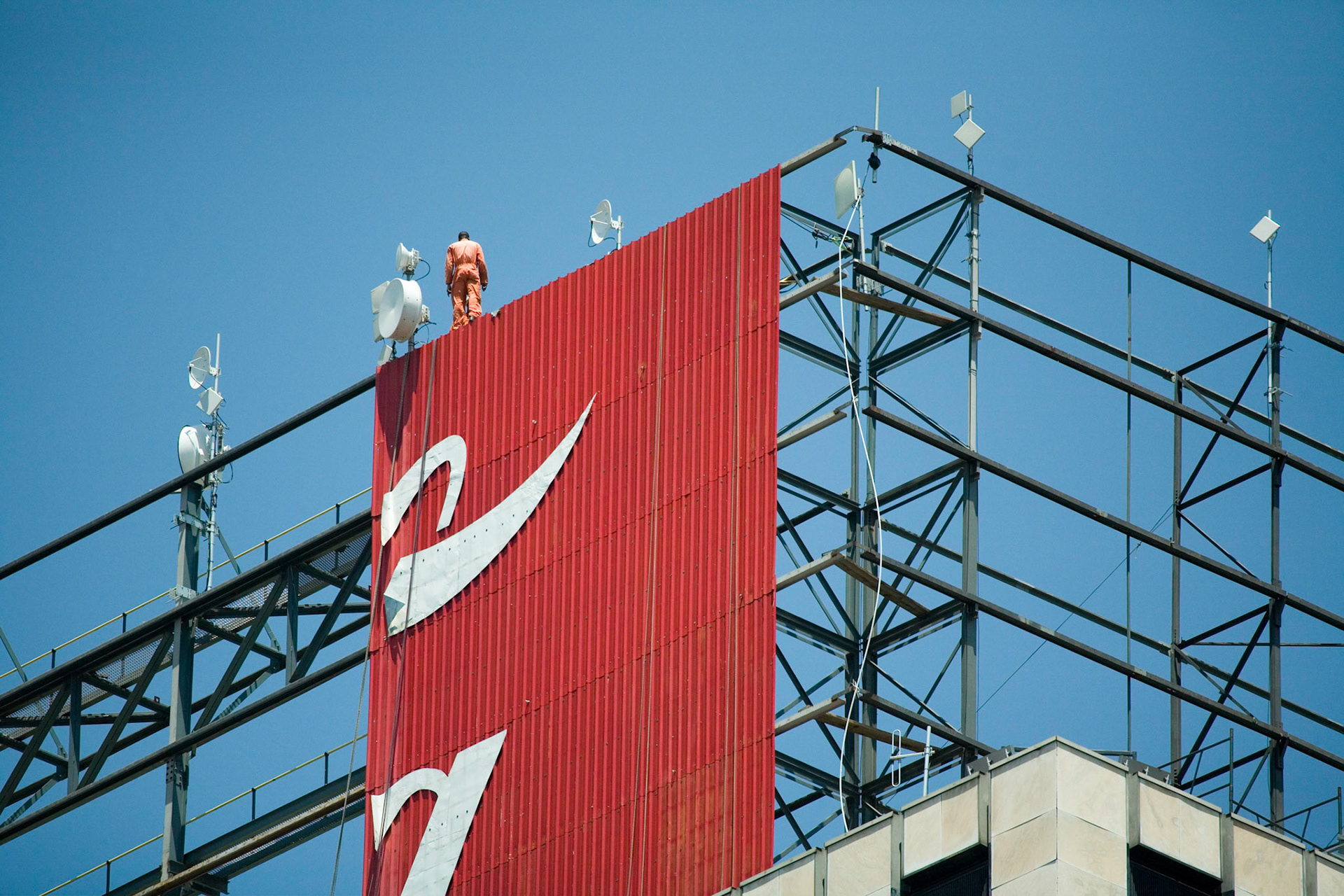
“Brand Antic”

11 February 2008. Johannesburg
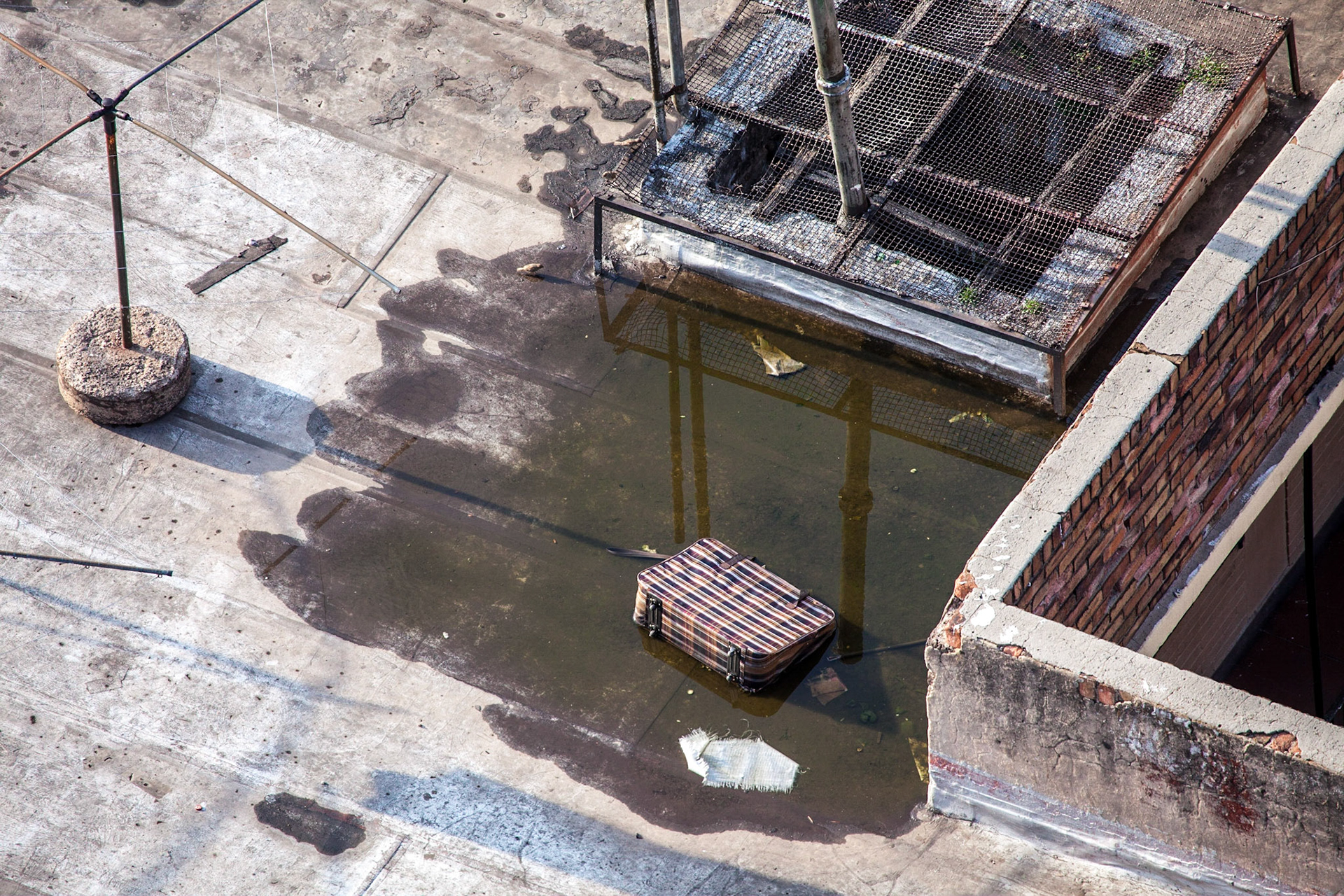
What is a surprising thing people might learn about Joburg by having a conversation with you?
That it's loveable. That the urban myths (all of them), from wildlife in the streets to ruthless commercialists, as true as all these may be, are only half the story. I meet people all the time that have shifted from trepidation to wariness to being pleasantly surprised. People soon learn that Joburgers, for the most part, are open and warm and authentic and that they can relax.

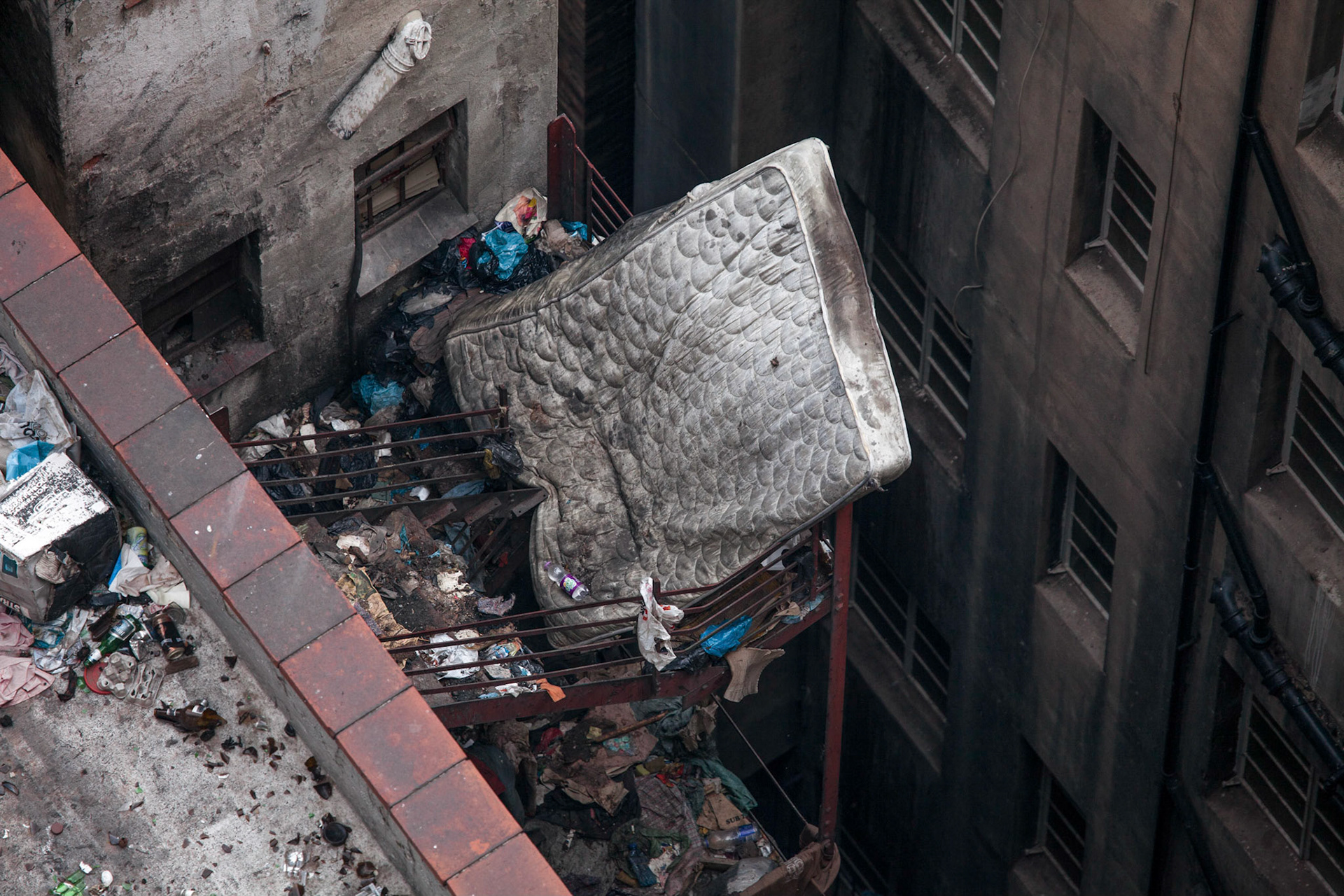
“All my belongings”

4 November 2010. Johannesburg
What three things should a visitor not leave Joburg without seeing or experiencing?
Meeting 3 different people, from 3 different places, doing 3 different things.
Your favourite Joburg author or favourite Joburg book?
Jo'burg by Guy Tillim

“Insomnia”

24 January 2014. Johannesburg
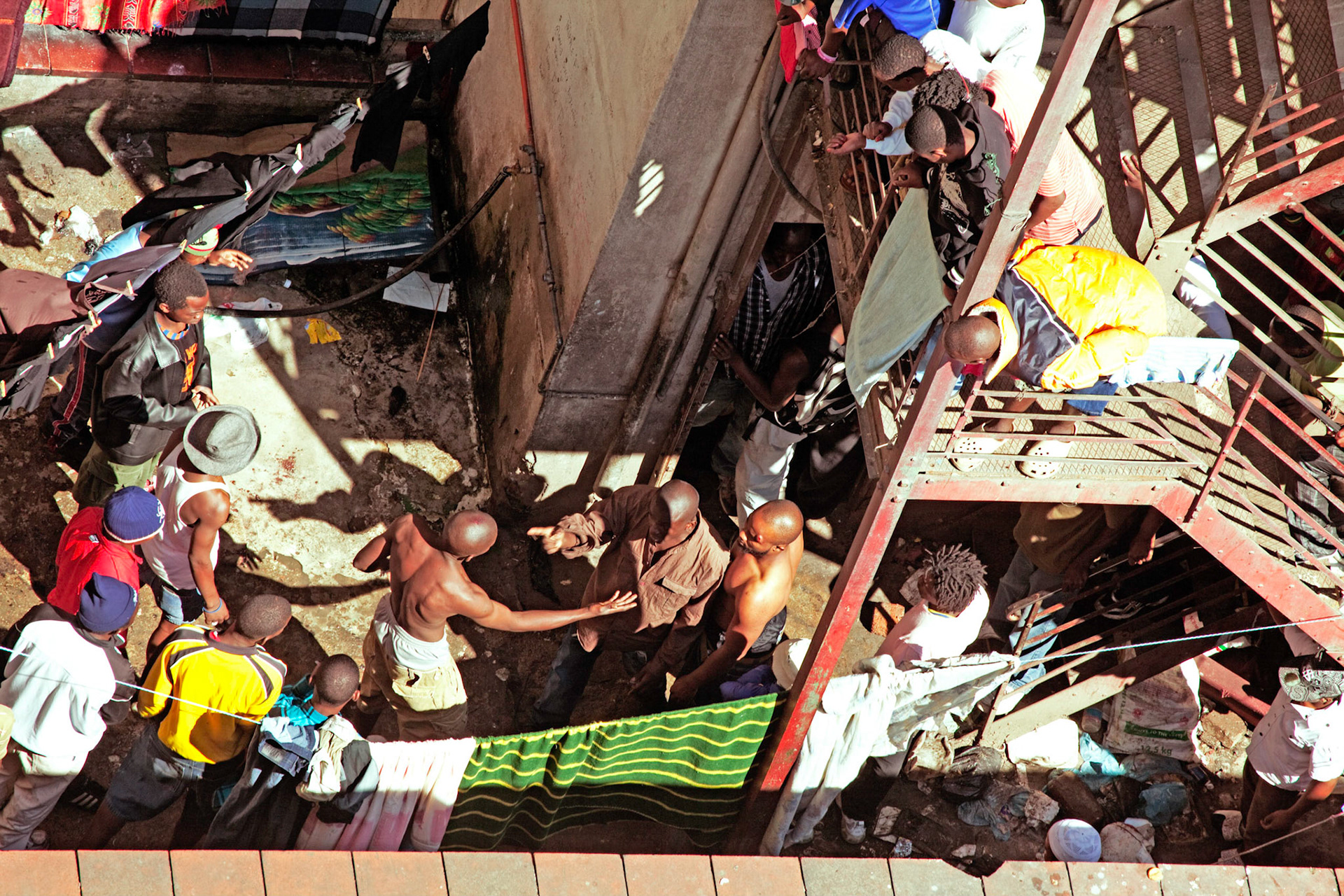
“Fight Club”

11 April 2010. Johannesburg
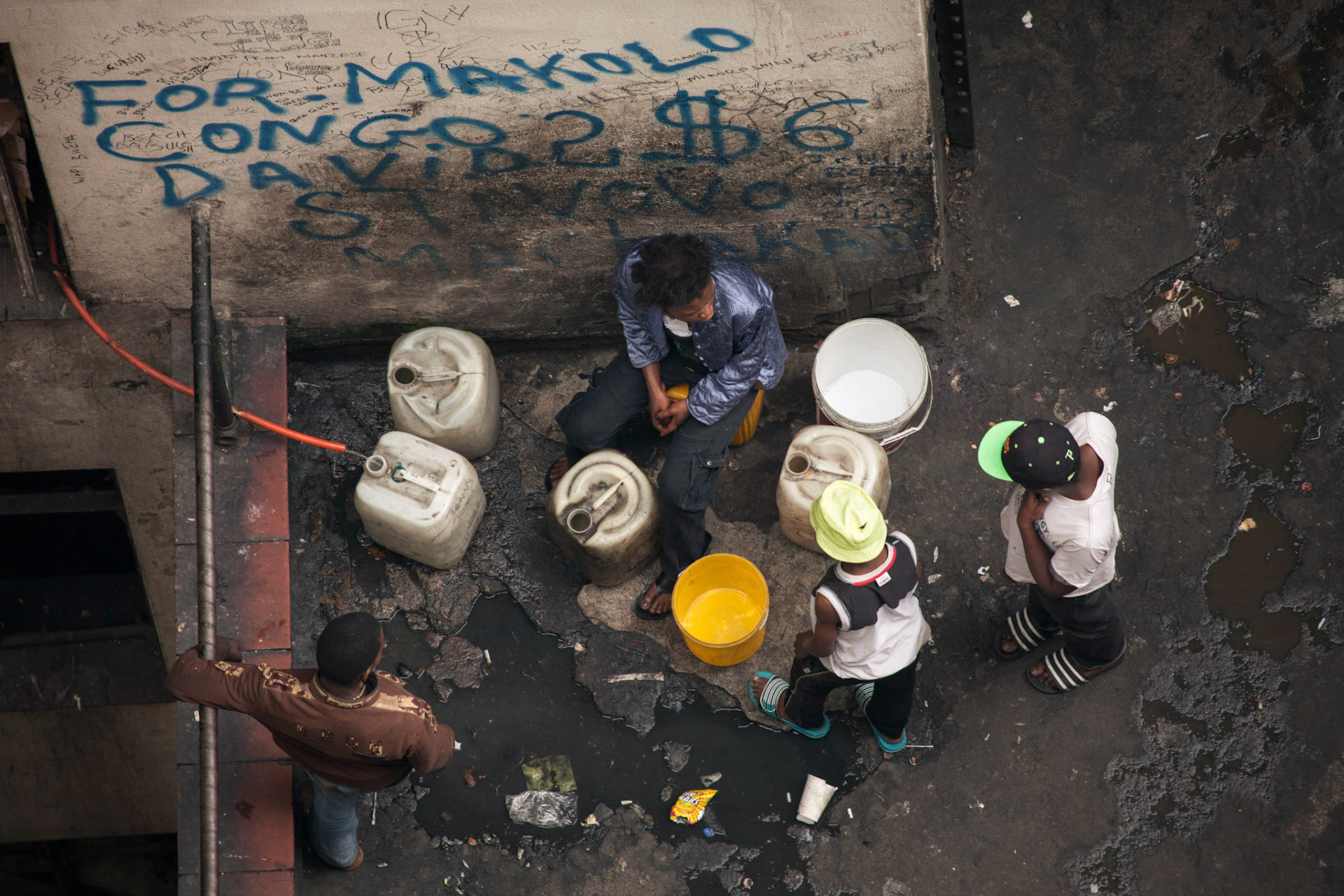
“Manning of the Spring”

24 January 2014. JohannesburG

One song on your Joburg soundtrack that either is about Joburg or makes you think about this city?
Grazing in the Grass by Hugh Masekela
(& We built this city by Starship :). I worked on a retainer basis for 2 property and 1 earthworks companies, documenting their various projects over 2 years. I delivered, but also made portraits of some of the contractors on site. "We built this city" is my homage to the unsung heroes of the Joburg economy.)
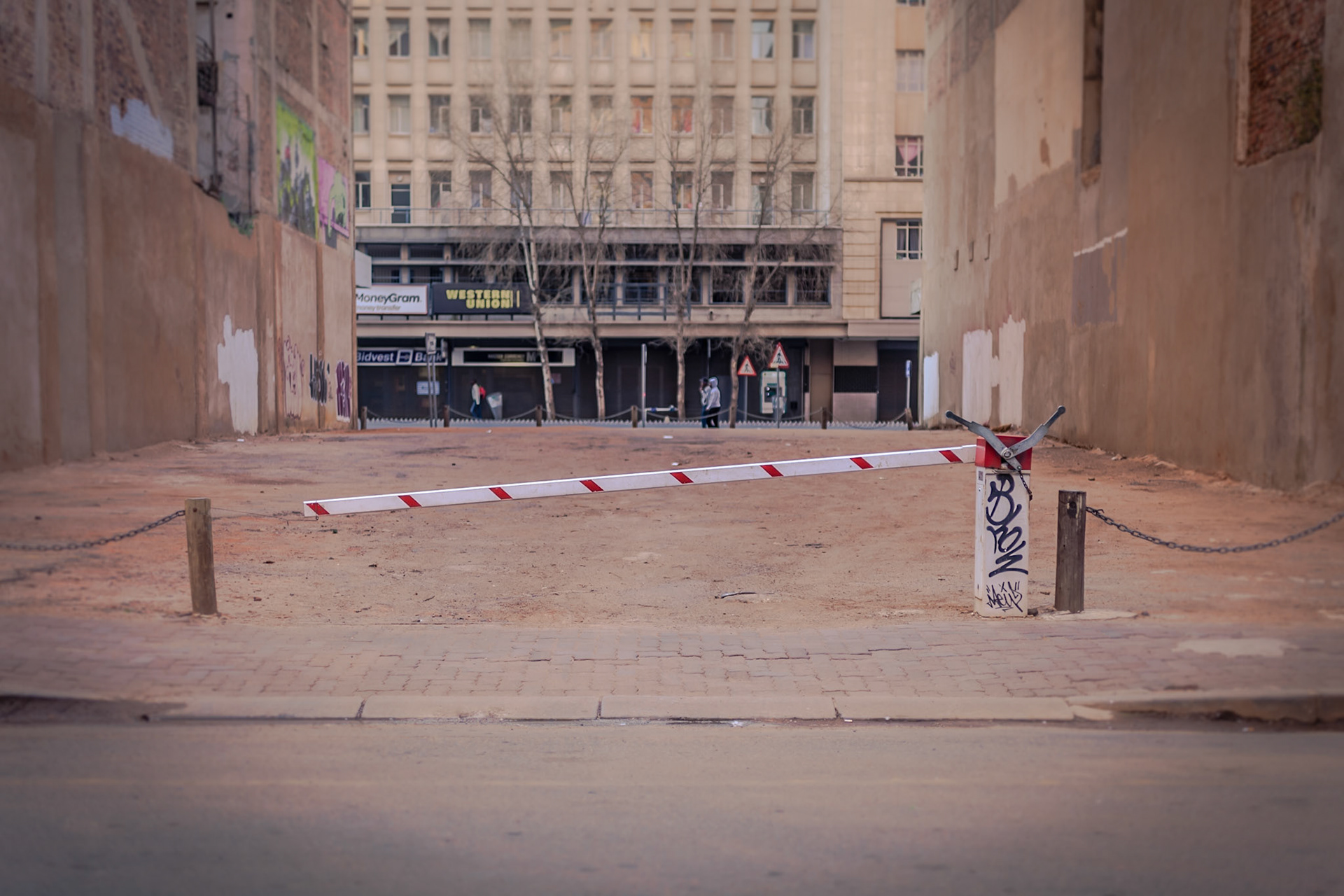
“Boom”

9 August 2016. Johannesburg
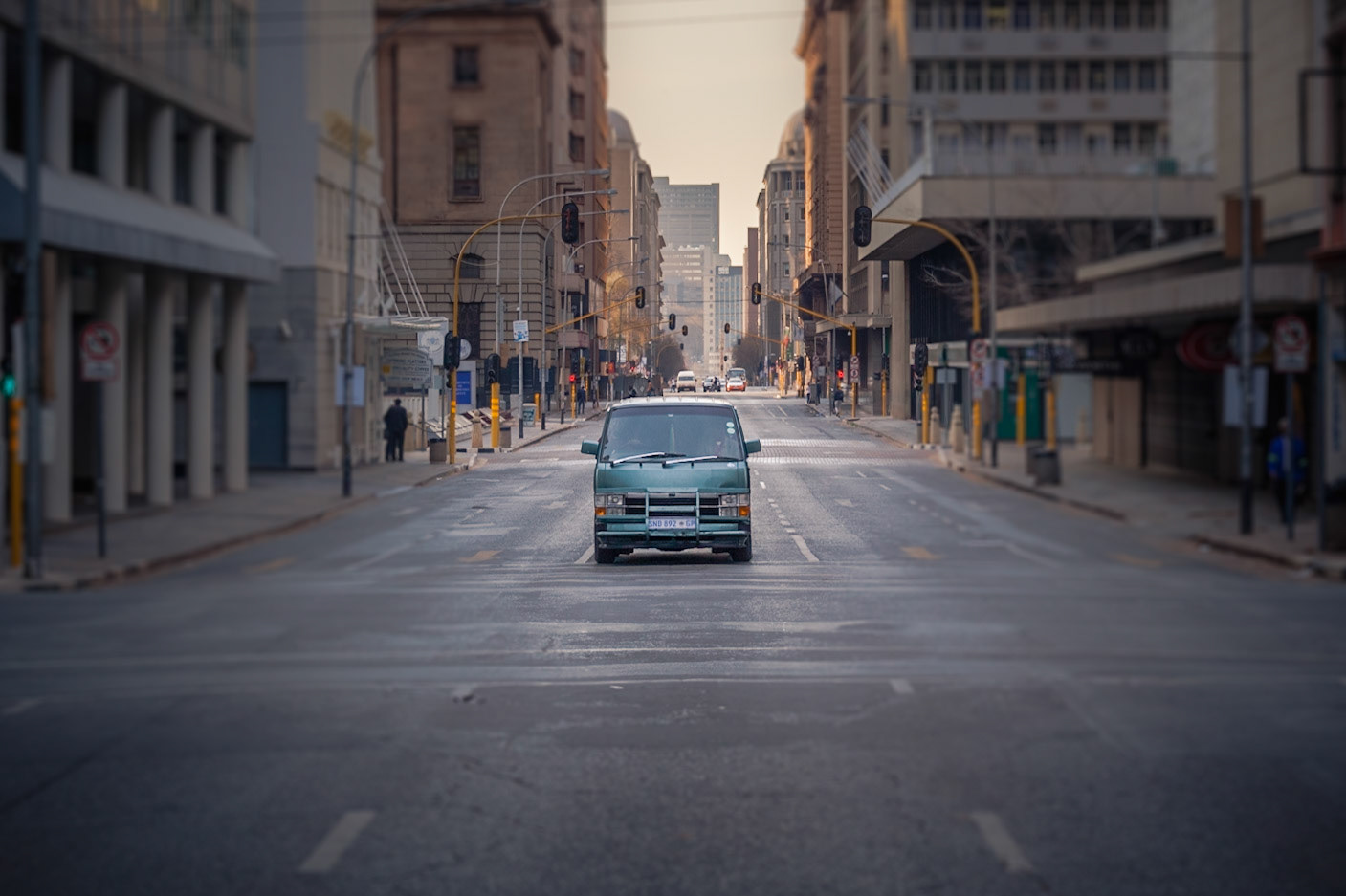
“Chicken”

9 August 2016. Johannesburg

The most memorable meal you have eaten in Joburg?
A Beyaynetu (mixed plate) of various wats on an injera, at an Ethiopian eatery, in Jeppe St. It came with an avo, mango and guava lassi, that was so think, the colours looked like the flag.
Johannesburg.


Back to Top